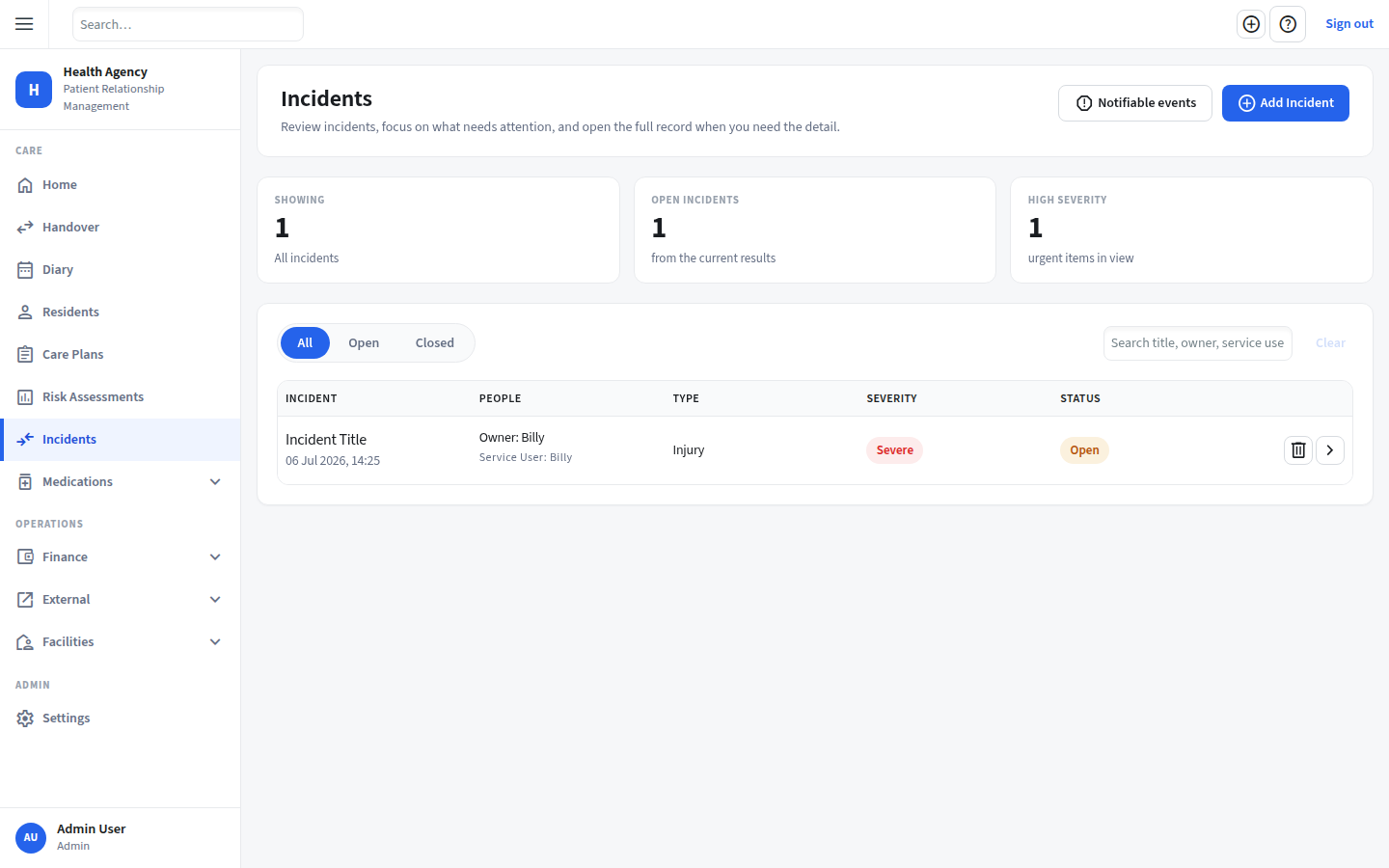
In short: Heddfa records incidents, drives their actions through to closure, and runs safeguarding, RIDDOR and DoLS notifications through a forward-only workflow with built-in statutory timeframes and overdue flags — so nothing falls through the cracks and nothing misses a deadline. From £10 per resident per month, staff free.
An incident isn’t a single event to log and forget — it’s a small process: record it, act on it, learn from it, and where the law requires, notify the regulator inside a set timeframe. When that process lives on paper and in someone’s head, two things go wrong: actions get left half-done, and statutory notifications get missed. Both are serious.
From report to closure
- Capture the full picture. What happened, who was involved, what was done at the time — recorded once, in one place, and immediately part of the audited record.
- Actions are tracked, not assumed. Follow-up actions are attached to the incident and driven to closure, so “we’ll sort that” doesn’t quietly evaporate.
- Patterns become visible. Because incidents are structured data, recurring themes — a resident’s falls, a particular time of day — surface instead of hiding in a drawer of forms.
Notifiable events with statutory clocks
Where an incident is notifiable — safeguarding, RIDDOR, DoLS — it runs through a dedicated workflow with the statutory timeframe built in. The clock is visible, the event flags as overdue if the deadline nears, and the notification record exports in one click for the regulator. For Welsh homes that means CIW’s expectations; for English homes, CQC’s. Either way, the deadline isn’t something you have to hold in your head.
Joined up with compliance and handover
An open incident shows on the compliance dashboard and, when it matters, in the shift handover, so the next team is aware. Nothing has to be copied across — record it once and it’s where it needs to be.